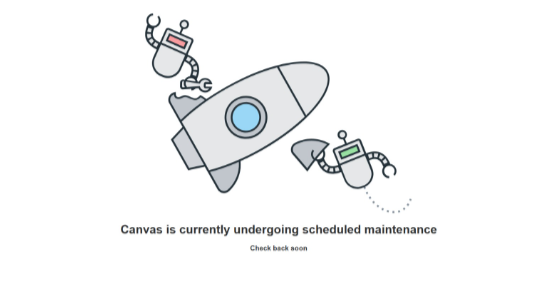
On May 7, 2026, students across the nation logged in to Canvas, where most colleges and high schools record grades and issue assignments, only to find the site was shut down. Many students were shown a message on their screens from the hacker group “ShinyHunters,” threatening to release the personal information of thousands of students if Instructure, the company that owns Canvas, didn’t pay ransom money. To investigate the security breach, Canvas was shut down for a number of hours, depending on the school. Security experts state the group had access to the data of over 9,000 institutions, says the Guardian.
According to Reuters, the hackers claimed to have access to millions of students’ names, emails and private messages. ShinyHunters gave Instructure until May 12 to pay the amount demanded. Instructure later made a statement that the hackers had gotten in through a flaw in its “Free for Teacher” software. After several hours, and for some schools, several days, Canvas was back up, and Instructure released a statement saying they had reached an agreement with the hackers, indicating that they had paid an unknown amount, says TechRadar. Many people followed the incidents through updates in the news or on social media.
“I heard that it was a group that hacked Canvas in order to extort them for money,” chemistry teacher Shayan Lavasani said. “I heard that apparently they did get the money, so quite sad.”
The event happened at an unfortunate time for students, with many college students taking final exams and many high school students riddled with assignments and Advanced Placement (AP) testing as the school year comes to a close.
“I couldn’t do my chem homework, which kind of sucked,” sophomore Makayla Cox said. “I have an AP test coming up that I was actually going to study for, and then I couldn’t, so that was unfortunate.”
Students and teachers had to adapt to the unexpected changes to be able to complete any assignments. Because the site went down with no warning, some teachers still expected students to have done their homework in advance.
“Some of my teachers gave extensions and stuff, and then some did not and expected you to already have stuff done, like my math teacher,” sophomore Meadow Long said. “In class, some teachers gave paper assignments, like Mr. Vanian just gave us a test on paper.”
The shutdown affected all teachers’ ability to administer online assignments and help kids work through missing assignments, as they are only listed on Canvas.
“It did happen right during tutorial, which is when all the kids come to me and say, ‘Hey, how can I get my grade up?’ which I always say, ‘Hey, let’s go to Canvas,’” Lavasani said. “Of course, Canvas was down, so it was like, well, I guess I can’t do anything.”
The inconvenience the shutdown caused has had teachers and students reflecting on our dependence on technology for academics nowadays. Some believe that paper assignments may be more reliable, while others believe that, since this was a one-time incident, continuing to rely on Canvas for almost all assignments and grades is optimal.
“You don’t want to be that guy who’s like, just go back to pen and paper, because genuinely, technology has a role to play, right?” Lavasani said. “Hopefully, we all are patient with each other, teachers as well, when a crisis like this happens.”