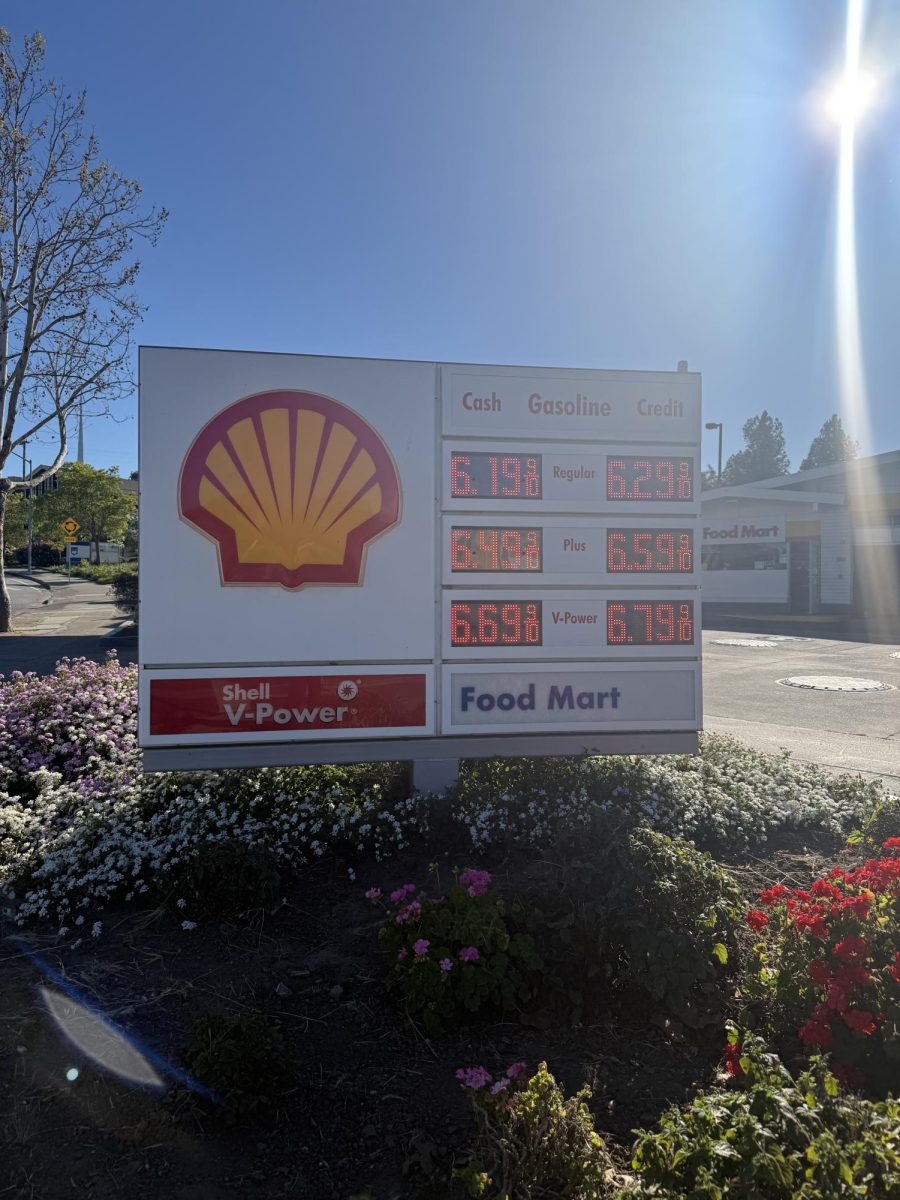
Gas prices are increasing nationally, with California having the highest gas prices in the country.
The war in Iran has been the main cause of the increase. The Strait of Hormuz lies in between Iran and Oman. It has been closed due to the conflict and, according to CNN, 20% of the world’s oil travels through the strait. There have also been strikes to oil infrastructure throughout the Middle East. The Brent crude oil prices rose to $107.92 per barrel. According to AAA the U.S.’s average gas prices are $3.99. However, California has been particularly impacted by the increase in gas prices with the average being $5.877.
“Before [the increase] it was $45 for me to fill my whole tank,” senior Emylia Hanni said. “It was like two hours of work. It’s chill. But then I [went] to the gas station. I already have a quarter tank, so I want to fill it up before it’s empty, because I’m known for driving on fumes. So I go to the gas station, tell me why it’s 55…dollars…and I don’t even get a full tank.”
California gas prices are higher than the national average due to various factors. The New York Times explained California’s special fuel blend that has less emissions, environmental taxes and the lack of oil refineries that make the state reliant on imports. The increased prices are impacting students, particularly those who live further away. Senior Dominic Dayeh commutes from Sunnyvale.
“I just don’t have the money to pay for gas, especially [since] I drive a lot, because I live far away,” Dayeh said. “What am I supposed to do? I can’t not go to school, but I also can’t not get gas. It’s tricky, because I’m in a lose-lose situation here.”
The cost of gas is also putting financial strain on people. Stanford economists estimated that the average household will pay $740 more in gas costs for the rest of the year. The prices have made Dayeh more conscious about his spending habits.
“I [had] to cut spending a lot,” Dayeh said. “I can’t buy the things that I want to buy because I’m worried I might not have enough money for gas. And I don’t have a job right now, so it’s rough out here … the only thing I’m buying right now is gas.”
Senior Aiden Modien also has had to make spending and lifestyle changes.
“I’m very much inclined to not go places anymore,” Modien said. “Anytime I think about getting something, what’s now in the back of my head is ‘Should I buy this or should I just wait to spend it on gas?’”
The Stanford economists projected that given Goldman Sachs estimation that oil prices will be half of the way back to the pre-war costs by April and 85% of the way back by June, gas prices will peak in May at $4.36 per gallon and decline slowly after. Modein feels that the U.S. involvement in the War in Iran will keep prices high.
“Until Trump gets his … hands off Iran, then [gas] won’t go down,” Modein said. “Hopefully soon, [but] realistically, probably not.”