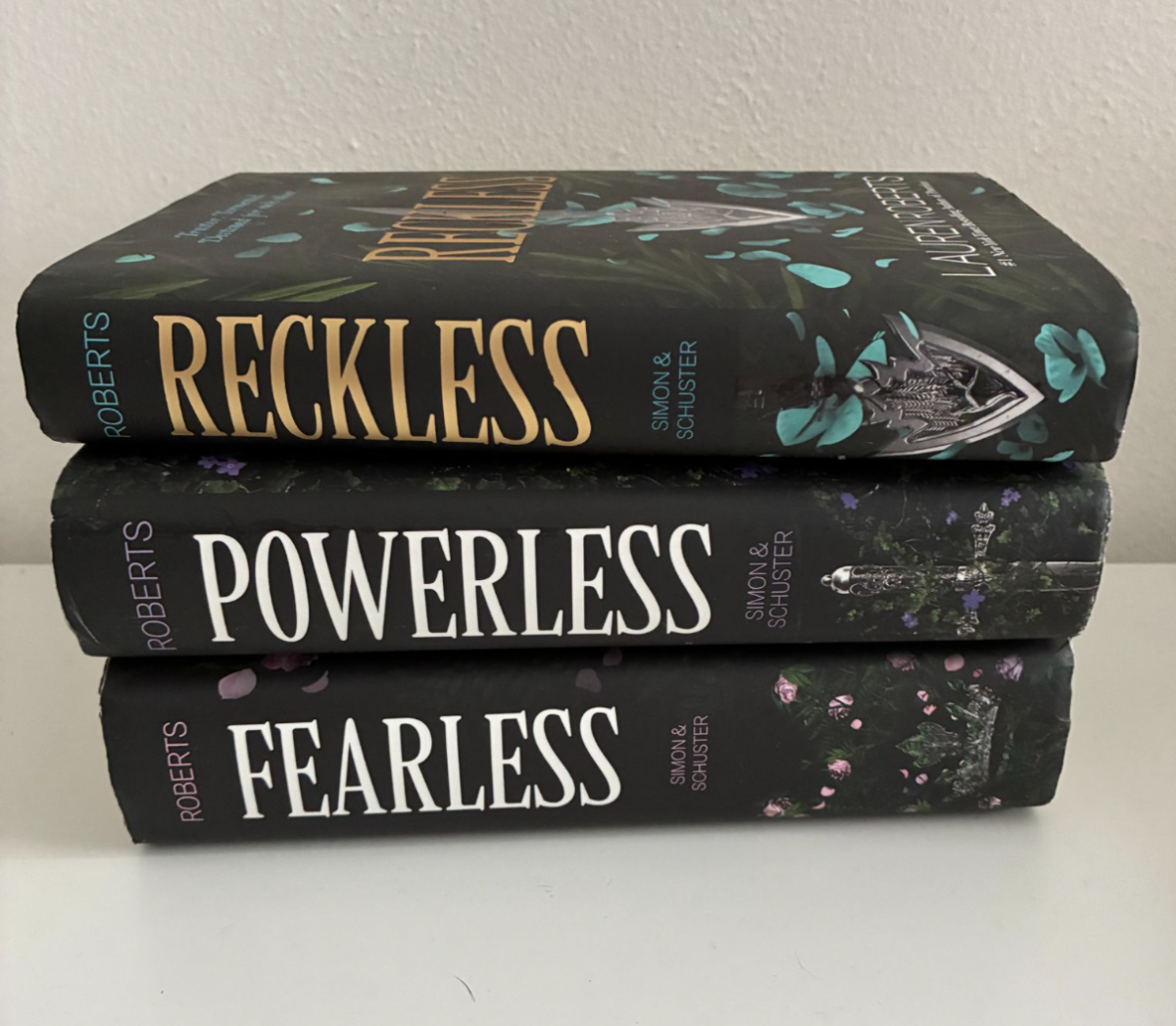
The Powerless trilogy by Lauren Roberts, which has been nominated for the Goodreads Choice Award, draws in readers with its promise of high stakes, intricate plot and romance. However, under the idea of it all, the novel relies heavily on overused tropes, weak prose and underdeveloped characters, making it a far less original and compelling story than its popularity suggests.
The trilogy follows Paedyn Gray, an Ordinary living in a society where magical abilities define whether one survives or not. Forced to hide her lack of power, Paedyn becomes entangled in a series of deadly trials designed to entertain the ruling Elite class.
As I was reading this, many elements felt strikingly familiar. The series of deadly trials used for entertainment closely resembles the main plot of The Hunger Games by Suzanne Collins, where survival is transformed into a spectacle by those in power. In both novels, there is an elite class that is framed as luxurious and cold, but in Powerless, the group is far less developed, lacking the political complexity and moral tension that made the Capitol a compelling antagonist. Another novel that this trilogy seems like a copy and paste of is The Red Queen by Victoria Aveyard. In both stories, there is a love triangle between the female main character and two princes, as well as an ability-based class system and an oppressed, powerless group. Instead of reimagining these ideas, Powerless represents them in a way that feels repetitive rather than innovative.
In addition to its lack of originality, this trilogy is weakened even more by its style of writing. The dialogue, which by the way takes up most of the books, is repetitive and unnatural. The characters frequently rely on clichés and overused expressions, such as constantly saying “Oh darling,” which adds little to the conversation and makes the interactions feel forced and melodramatic. The internal monologues are long for no reason, because characters say things that add nothing to the plot or story. Another thing that bothered me is the series of descriptive writing, which often prioritized style over substance. Roberts frequently uses flowery phrasing, such as describing Paedyn as “the line between deadly and divine,” which sounds striking at first but lacks any logic. These attempts at romantic or dramatic imagery fail to convey concrete ideas.
The trilogy’s characters, particularly Paedyn Grey, are underdeveloped and hard to relate to. Although she is positioned as a morally grey, cutthroat protagonist, Paedyn often reads more like a self-insert fantasy, lacking meaningful flaws or personal growth. Her actions and decisions frequently show entitlement or vanity, which is the opposite of what the narrative promises. By refusing to provide her with genuine challenges or moments of introspection, Roberts creates a character that remains static throughout the entire series, making it hard for readers to form a connection or investment in her journey. She is the definition of a pick-me, which is annoying and uncomfortable to read.
Another character I had major issues with was Kai Azer. He is posed to be this tough, morally gray character that works for his king and is capable of violence. He is actually quite the opposite, because throughout the series, he lets families he’s supposed to kill go and barely lifts a finger towards other people. His whole personality is defined by flirtation and intermittent gloom when the author sees fit. Additionally, his abilities and influence are exaggerated without enough justification, leaving him underdeveloped and unrelatable. Characters are supposed to be flawed because they are supposed to be realistic, or else no one can relate. Kai’s sole purpose is to create tension between him and Paedyn, which is not enough to keep a good story going.
The last weakness I’m going to talk about is the plot holes and inconsistencies. At the start, Paedyn emphasizes her deep attachment towards Adena, yet after Adena’s death, she is barely mentioned throughout the rest of the three books. A realistic character would not move on so fast, and this sudden emotional shift doesn’t help the credibility of Paedyn’s character development. Similarly, the supposed disease affecting Ordinaries is introduced as a significant threat early in the narrative, but is not fully explained or constantly addressed, leaving readers with unanswered questions about its origin, transmission and impact.
There are plenty more flaws, but these examples show how weak the story’s logic is and how it makes it difficult for readers to fully immerse themselves in the world Roberts has created. Overall, I did not like this trilogy, but some might look past these issues and enjoy these books and the universe the series provides.