For the past year, rumors of an Ultimate Fighting Championship (UFC) event at the White House have been circulating. In recent months, those rumors were confirmed, and the list of fighters was released. However, these fights at the White House represent more than just a sporting event: it’s an example of why politics and sports should stay separate.
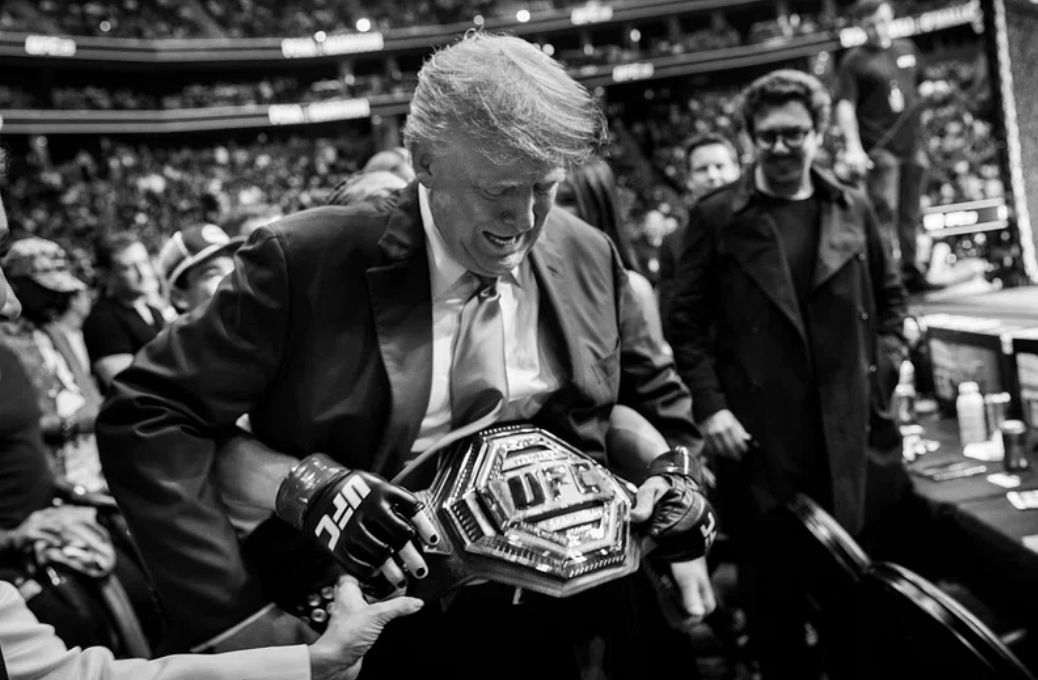
In July 2025, President Trump suggested to UFC president Dana White that a UFC event be held at the White House. This led to widespread speculation about the event, which was later confirmed in August 2025 and cemented by the roster announcement in March 2026. The event was labeled “UFC Freedom Fights 250” to celebrate the 250th anniversary of the United States. Since then, worries and debates have emerged about the political implications of this event.
For one, the idea itself is flawed. The White House is a national symbol of governance and the presidency, and using it as the venue of a UFC event risks associating it with entertainment, superficializing its purpose. This matters because it blurs the line between institutions meant to serve the public and events made for profit and entertainment, overall diminishing the meaning of those institutions.
Furthermore, the event is directly tied to Trump, suggested by him and being held on his birthday, bringing politics into it and making the event not politically neutral. To some, participating in this event feels like an endorsement of a certain political figure, when sports should just be about sports. For example, top middleweight contender Sean Strickland has openly stated that he refused an offer to the event for the reason of not wanting to be affiliated with Trump. This disappointed many, as Strickland is currently one of the few top-ranked American fighters in the UFC, ironically making the event less “American.”
This isn’t only disappointing to the fans, but unfair to the fighters. It forces them to decide whether to be part of a politically charged setting or to miss out on a potentially career-changing event. Athletes can usually fight only two or three times a year, which over the course of five years (about how long a “fighter’s prime” typically lasts) amounts to only 10 to 15 fights. Given that, they are only able to fight so many times in a career. Because of how an opportunity to fight at such a big event could easily change a fighter’s career trajectory, tying it to political circumstances is unfair to the athletes, as they signed up to be fighters, not political figures.
While some fighters choose not to participate due to the political complications, some are simply not allowed to. Former bantamweight champion Merab Dvalishvili said in an interview that the UFC told him that his highly-awaited trilogy fight with the current bantamweight champion Petr Yan won’t be happening at the White House solely for the fact that Yan is Russian. This once again disappointed many fans, as this was one of the most exciting match-ups they could’ve made. However, Yan isn’t the only Russian fighter supposedly not allowed to fight at this event. Welterweight and Middleweight champions Islam Makhachev and Khamzat Chimaev, who are also the number one and three ranked pound-for-pound fighters, are widely considered among the most dominant fighters today. Since all three of these fighters earned their titles in their previous fights, most people thought that it would have only made sense to see them at this event, as they are objectively some of the most deserving. The fact that none of them were included in this event led many to believe that the reason for their exclusion was their Russian nationalities. If this is true, their exclusion, not being based on merit, but by politics, undermines the spirit of competition and overall challenges the legitimacy of the organization as a whole.
UFC Freedom 250 may sound fun, but it comes at a cost. Sports have always been one of the few places where people are able to come together regardless of background, and this event threatens this sentiment. At the end of the day, a fight should be decided by skill, not politics.