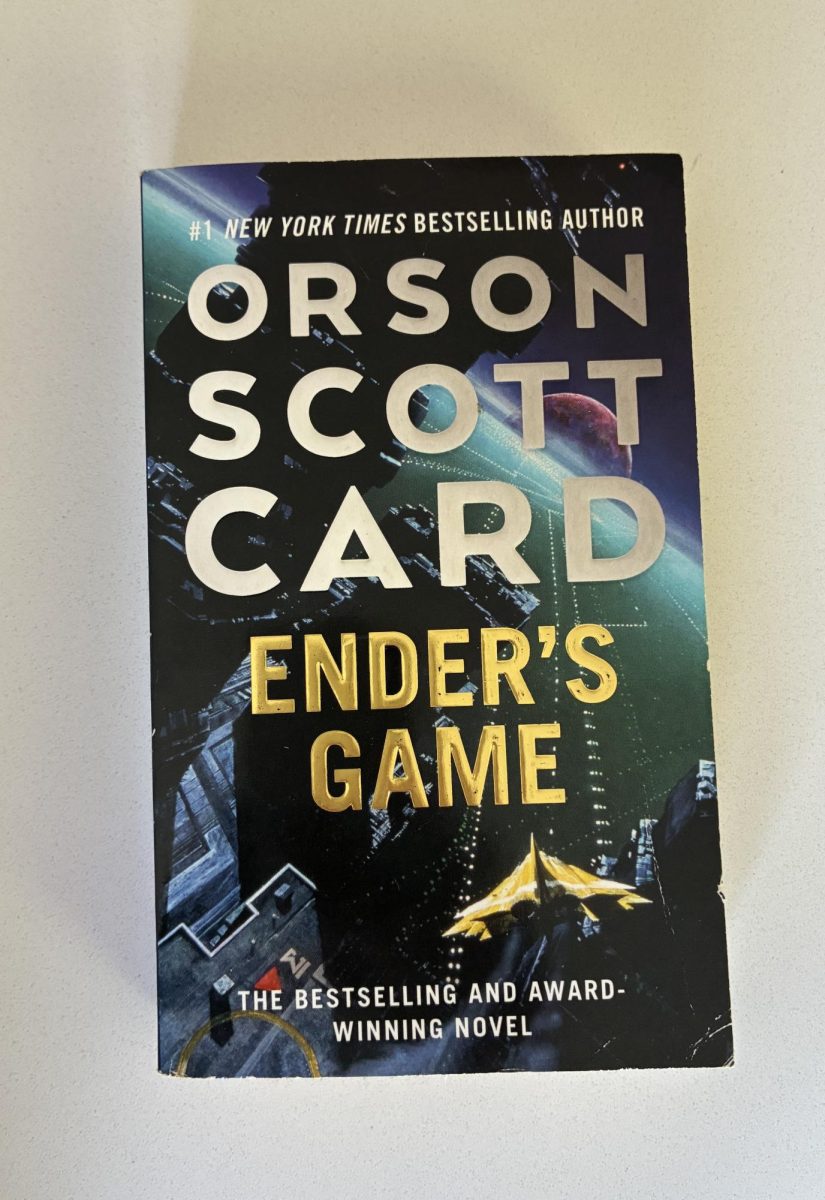
Orson Scott Card’s “Ender’s Game” was a compelling novel where a young boy is trained to face challenges far beyond his age, raising questions about leadership, responsibility and the cost of talent.
This article contains spoilers for the “Ender’s Game.”
Ender Wiggin is a child prodigy selected to attend Battle School, a space station where other kids like himself are trained to prepare for an interstellar war against alien species. Through harsh training and simulated battles, Ender demonstrates exceptional strategic thinking, but the pressure and isolation of his environment challenge him emotionally and morally. This story follows his growth as a leader and highlights the personal cost of his abilities.
Ender’s Game is appealing for many reasons: a relatable protagonist, thrilling action and an ending that surprises without feeling forced. Card balances the excitement with thoughtful exploration of moral and ethical questions, without ever being heavy-handed. The leaders at Battle School, for instance, make difficult decisions that shape Ender’s path, but they aren’t cast simply as villains. Similarly, Ender and his peers have to navigate through a world where it is difficult to tell right from wrong, showing that people’s motives and actions usually exist in shades of gray. In this universe, every character plays an important role, even when their goals clash.
Other than its action and moral questions, Ender’s Game resonated to me because of the hope it inspires. Ender is a character that most people can relate to: the underdog, someone underestimated, yet he has the potential to shine. The blend of struggle and brilliance makes him feel universal. He represents a part of all of us who have ever wanted a chance to prove ourselves. Even if we aren’t literally the smartest person in the room, reading Ender’s story offers a comforting reminder that, given the right opportunity, we all have the potential to rise to a challenge.
There was one minor flaw I noticed. Some characters are pushed to extremes that feel a little unrealistic. It’s unrealistic because I’ve never encountered a child that was pushed so far that he’s capable of murder. For example, Bonzo, one of Ender’s peers, shows a level of anger and violence to Ender that wasn’t really explained and seemed extreme. Unlike Ender, whose actions remain grounded in his experiences and emotions, Bonzo comes across as cruel for no reason. Still, this is a minor issue and doesn’t take away from the story. Ender’s Game remains an amazing novel, and this minor detail is easy to overlook.
Overall, I would definitely recommend this book to anyone who enjoys a mix of adventure, strategy and moral depth.