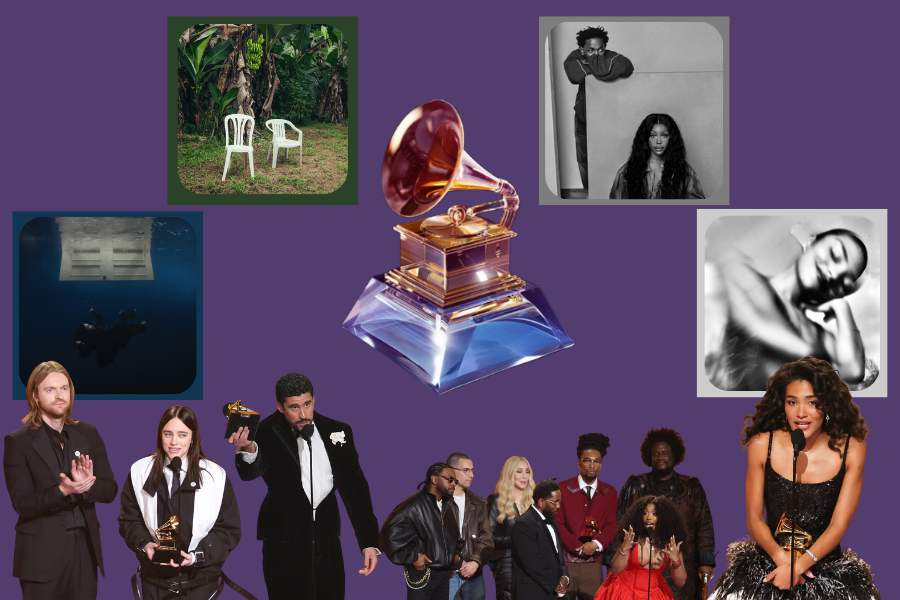
Music’s biggest night, the Grammys, took place on Feb. 1 and anticipation over who would win Grammy gold was buzzing throughout the internet. The ceremony honors music from the past year, but with no clear consensus on which projects defined the year, it seemed like a weak year for the Grammys celebration.
2024 held huge hits such as “Birds of a Feather” by Billie Eilish, “Brat” by Charli XCX, “Not Like Us” by Kendrick Lamar, and music from new, but now established artists, like Teddy Swims, Chappell Roan, Benson Boone and Sabrina Carpenter. There is a more underwhelming selection this year due to weaker releases. Anticipation for 2026’s releases from major artists like Bruno Mars, BTS and Harry Styles is even higher due to the lack of big, impactful releases from the previous year.
This year, the usual star-studded contenders for prestigious awards like Taylor Swift, Olivia Rodrigo and The Weeknd were nowhere to be found. Instead, they were replaced by new artists that seemed to convey no real change from the poppy, almost euphoric type of music we received in 2024, especially in the big four categories: Song of the Year, Record of the Year, Album of the Year and Best New Artist.
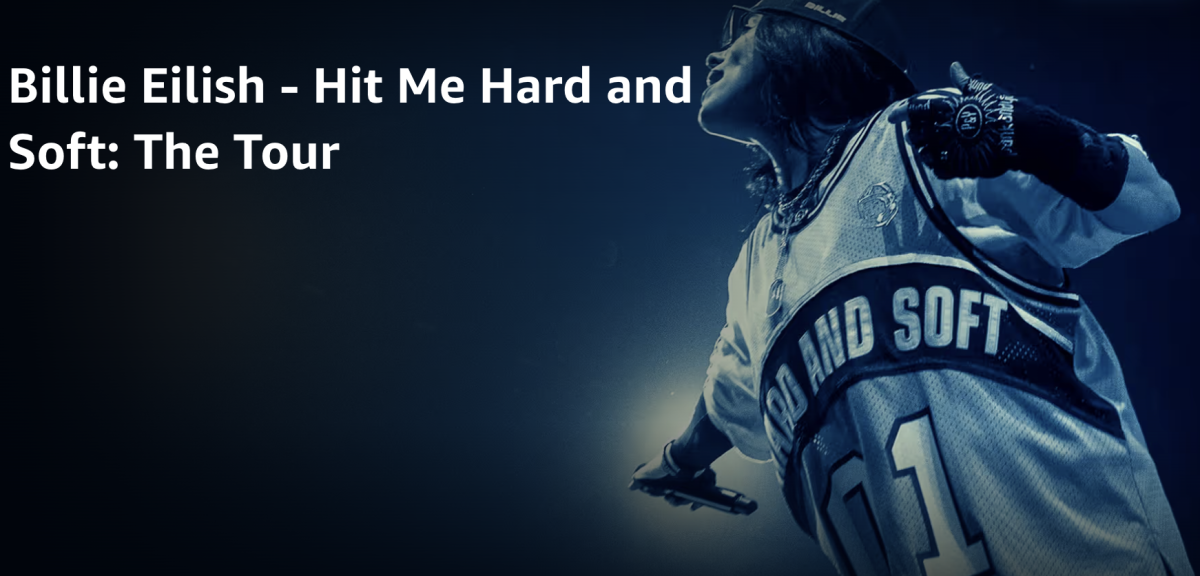
To start off, Song of the Year went to “Wildflower” by Billie Eilish, marking her third win in this category during her career. This says more about 2025 than it does about the music itself. The fact that a song released in May 2024, then pushed as a single in 2025, could rise to the top of the charts speaks to the absence of a defining musical moment in 2025. No song felt unavoidable, no track that instantly captured the collective mood or summed up our current situation. “Wildflower” is gentle, reflective and beautifully written and produced. Still, its nomination feels less like a response to the year and more like a yearning for something familiar to hold on to.
Considering that Billie Eilish is a generational pop star, the fact that she didn’t release any new music in 2025 ended a generational run that included the massive cultural impact of HIT ME HARD AND SOFT and the sharp culture-shifting collaboration with Charli XCX on “Guess.” Billie Eilish’s win highlights a year where excellence from the previous year dominated, partially due to the recent struggle to produce a song that embodied the year.
The nominees for Song of the Year and Record of the Year almost mirrored each other, the only exceptions being “The Subway” by Chappell Roan and “Golden [From ‘KPop Demon Hunters’]” by HUNTR/X. The winner of the Record of the Year category went to “luther” by Kendrick Lamar and SZA. This marked another win for a song released in 2024, and even though it made the Grammy cut-off between Aug. 31, 2024, and Aug. 30, 2025, the song’s popularity decreased during the year as its relevance slipped. After an impressive 13 weeks at number one, it slowly dropped off the charts in late 2025. Topping Apple Music’s Top Songs of 2025: Global, “luther” is considered to be one of the biggest songs of 2025, but in reality, most of the songs on the list, including “luther,” were released in 2024.
Record of the Year deals with the recording of a song, and the fact that “luther” enlisted 8 total producers and performers to create a track that is heavily based on and samples the 1982 rendition of “If This World Were Mine” by Luther Vandross and Cheryl Lynn shows a lack of new experimental and defining sounds for 2025. The song was definitely one of the better choices and was favored to win in this category, but the fact that so many people worked on a single song goes to show how weak the competition was in 2025 and the drought of authentic, new tracks.
The 2025 Album of the Year went to Bad Bunny for “Debí Tirar Más Fotos” (DTMF), a critically acclaimed Latin album. Its win was unexpected, though, since this is the first foreign-language album to win this category, suggesting a lack of strong contenders. His music, rooted in life and vibrant emotions, brought language, culture and heart into a space that often feels so dictated by the industry. The energy in the room was not only about the history he made as the first Latino artist to take home this prize, but also about the storytelling of all Latinos’ lives through this album.
At the same time, his victory shows a tiredness in 2025’s field for album of the year. There were several albums in contention from artists with long careers and extensive creative legacies, yet very few were emblematic of 2025, given the pressures on creativity over the past year, whether from the news or the general uncertainty in the world. While other albums seemed more typical for the industry, this album resonated more with the people than anything else.
The Best New Artist award went to Olivia Dean, whose lyrical quality, prose and optimism were in stark contrast to the repetitive beats or depressing tones of her competitors. For example, Katseye’s “Gnarly” had overly repetitive and considerably weak production with meaningless lyrics; similarly, the Marias, a group that debuted nearly 10 years ago, had an album full of soft, dark, generic pop sounds that were merely sad. In contrast to 2024, which was full of euphoric new tracks in this field, her win felt less like a triumph and more like an exhale, a reminder of the importance of emotional clarity, in an industry being taken over by TikTok-like songs that lack any subtlety and simply scream for attention. In comparison, this year was particularly thin; her songs brought dimension and sincerity back into the limelight.
However, what makes this moment even more telling is its timing. Olivia Dean broke through later in the year, towards the end of the recording period, which was from Aug. 31, 2024, to Aug 31, 2025, in late September with her major hits, “Man I Need” and “So Easy (To Fall In Love).” An essential part of her work is connection and humanity which made their way into her work. Ultimately, this points to a larger issue at the Grammys: the music industry was uninteresting this year. Dean’s victory quietly underscored that gap. Her win was definitely deserved, and it revealed how rare freshness was this year.
The 68th annual Grammys seems to serve as an intermission, honoring what was left from 2024 while the industry builds momentum for 2026. With a lack of clear identity and sound that defined the year of 2025, the Grammys ceremony also lacked strong, outstanding choices.