This story was originally published in our 2025 Spring magazine.
The effect of microscopic plastics on human health is still being researched, but some studies suggest that higher levels of exposure to these microplastics could lead to worse health outcomes.
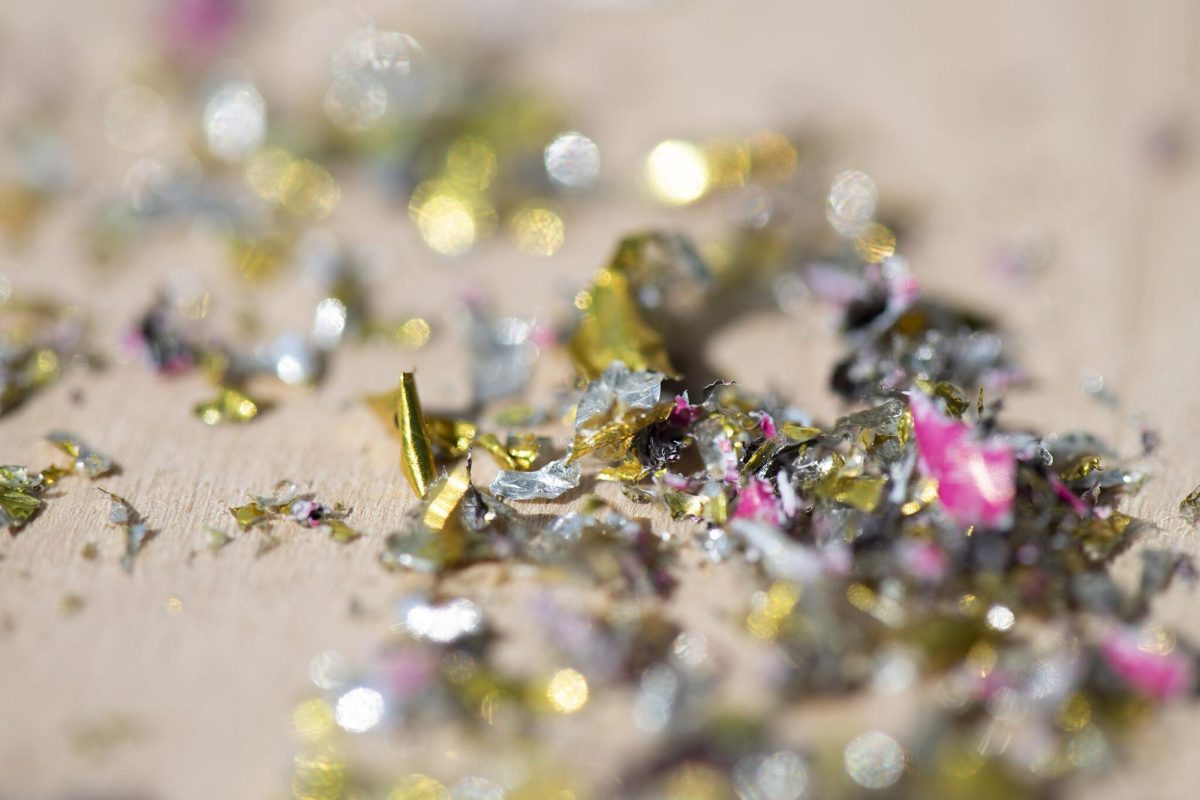
Microplastics are plastics that have been broken down to the microscopic level. These plastics can be found in the air we breathe, the water we drink and the food we eat. A 2019 analysis from the World Wildlife Fund said that an average person could be ingesting up to five grams of plastic a week, which is the equivalent of a credit card. However, that number could also be as low as 0.1 grams. (Many scientists say numbers like these are an overestimation). Dr. Kara Meister, a Stanford head and neck surgeon and pediatric otolaryngologist, specializes in ear, nose and throat disorders among children. Meister also takes an interest in the influence of pollutants, including microplastics, on health.
“There are some studies that support worse health outcomes with higher burden or exposure of microplastics, including heart attacks, stroke and death, but how exactly this is happening and what mechanisms underlie these findings are still unknown,” Meister said. “There have also been correlations with worse fertility and possibly increased cancer risks.”
Skyler Paoli, an Eckerd College graduate who researched microplastics in Tampa Bay as well as single-use plastics, described a fellow student’s experiment on how plastics affect copepods, tiny zooplankton at the bottom of the food chain. He said that the student fed the copepods microplastics to see how it would impact their capacity to reproduce, and found that the copepods had fewer babies when they were being fed microplastics.
“I’ve seen the plastic in our drinking water,” Paoli said. “It was to the point where our tap water had too much plastic to be a good control group for looking at the experimental group that was Tampa Bay.”
Paoli said that once plastic breaks down into microplastics in the ocean, it’s nearly impossible to clean up.
“By definition, microplastics are designed to not break down,” Meister said. “As such, they can morph as they are exposed to Ultraviolet (UV) light, heat and trauma. This makes them really heterogeneous and therefore difficult to study.”
According to the journal Nature, contamination is also often a problem when trying to study microplastics. This is because plastics are everywhere, including in petri dishes and lab equipment, that would usually be used to house samples. Meister said those aren’t the only challenges.
“The biggest challenges we are facing in the field are two-fold,” Meister said. “First, we need ways to measure microplastics in biological samples that can both provide quantity, volume and location in a way that is reproducible and reliable. Second, we need more understanding of how microplastics may be harming humans on the individual level – this is essential to motivating human behavior and change.”
Meister said that when it comes to microplastics, people can act both individually, by doing things like avoiding single-use plastics, or on a larger scale, like with California’s plan to start testing for microplastic levels in drinking water. During his work with reducing single-use plastics, Paoli helped develop an app called Remora, which can be used to track how much single-use plastic people are using. But Paoli said that big-picture, what we really need is better legislation. He said that in Europe they have extended producer responsibility (EPR) for plastic, which means corporations have to pay to manage the trash that their items create.
“Other countries have solutions that we’re not ready for,” Paoli said.